
Muslim Therapist Ontario
Faith-affirming, evidence-based therapy for Muslims across Ontario. Delivered virtually by a Muslim psychologist who understands clinical science and faith.
by Dr. Belal Zia, Ph.D., C.Psych.
Psychologist & Founder, Discourse Psychology Centre
Muslim Psychologist in Ontario?
If you are seeking a Muslim psychologist in Mississauga, Milton, Oakville or anywhere in Ontario, we can help. Discourse Psychology Centre offers virtual faith-affirming care.
647 - 203 - 1468
You Shouldn't have to Choose Between your Faith and your Mental Health
Many Muslims delay seeking therapy because they worry a therapist won’t understand their faith. Or worse, they are scared that their therapist will work against their beliefs, values, and way of life. You may have wondered whether a therapist will treat your faith as a problem to be solved, whether you’ll have to explain the basics of Islam before you can even get to what brought you in, or whether therapy is haram.
At Discourse Psychology Centre, faith is not a barrier to work around. It’s essential context for understanding you. It can be a source of resilience for some, and feel stressful to manage for others. Therapy here is never in conflict with your religious values. Treatment is adapted to work within your faith framework, not against it.
Is Therapy Haram?
Many Muslims wonder whether the “modern concept” of mental health is something Islam recognizes, or whether it’s a foreign, secular framework being layered onto their faith. In other words: is therapy haram?
The short answer: It isn’t. The Islamic tradition itself makes the case.
The Qur’an and Seerah are full of emotional struggles:
- The Prophet Muhammad ﷺ endured a period of grief and loss that was so difficult it is remembered as the Year of Sorrow.
- Ya’qub (a.s.) experienced grief so profound at the loss of his son, that the Qur’an describes it affecting his sight (12:84).
- Maryam (a.s.) experienced such intense distress that she expressed a wish for death (19:23).
These accounts show that emotional pain is part of the human experience. Seeking relief from pain has always had a place in Islam.
Our intellectual history in Islam reinforces this concept. Long before “psychology” existed as a Western discipline, Muslim scholars were pioneering systematic approaches to mental and emotional wellbeing. Figures like Ibn Sina (Avicenna), Al-Razi, Al-Ghazali, and Al-Balkhi wrote extensively on the mind, emotion, and treatment centuries before the field formalized in the West.
Seeking treatment for mental health difficulties, then, isn’t a departure from Islam. It’s consistent with Islam, and arguably a continuation of a Muslim scholarly legacy.
What Therapy with a Muslim Therapist looks like
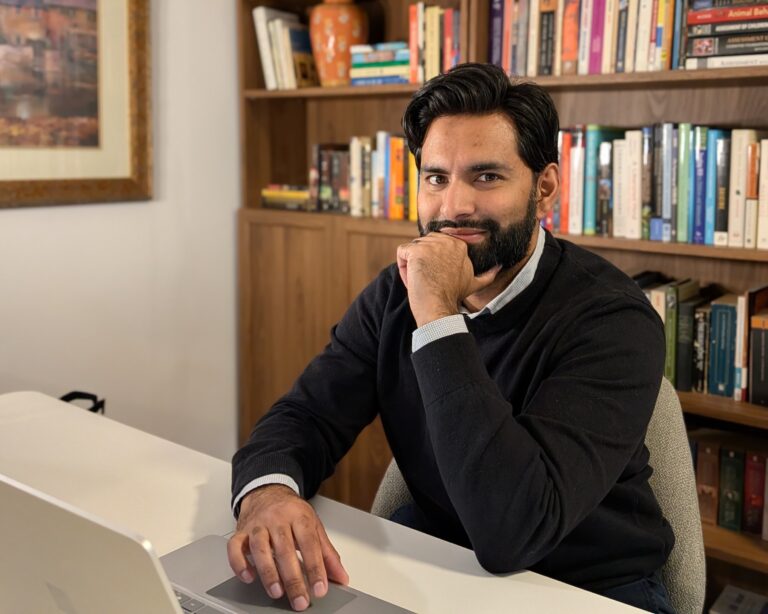
Dr. Belal Zia is a Muslim psychologist who brings personal, professional, and academic familiarity with Muslim cultural and religious contexts to his clinical work. As a Muslim therapist, his experience of the pressures that shape Muslim life in Ontario include short-hand familiarity with challenges that Muslims face, including:
- Navigating faith and identity in a Western context
- Managing family and community expectations
- Addressing stigma around mental health within Muslim communities
- Reconciling religious values with the challenges of daily life
- Marriage and family concerns within a faith framework
His work on religion and mental health has been featured at national and international venues, including the peer-reviewed literature (JAMA Psychiatry). His doctoral research at the University of Manitoba, built on his insights as a Muslim therapist, was the development of a mental health literacy program (MH101: For Muslims) specifically for Muslim communities.
Dr. Zia’s interest in religions extends his work to clients of other faith backgrounds as well, using a cultural-humility approach and genuine interest in comparative theology.
All care is evidence-based, using treatments such as CBT, DBT, EFT, and psychodynamic therapy, tailored to each client and integrated with understandings of Islamic Psychology for clients who want to merge traditional Islamic and contemporary science into their treatment.
Common Concerns a Muslim Psychologist Treats
Muslim clients often come to therapy for anxiety and depression, identity and belonging, intergenerational conflict, navigating marriage and family expectations, difficulties in multigenerational households, grief and loss, immigration and acculturation stress, work and career pressure, and raising children between cultures.
Mental Health Stigma in the Community
Many Muslims worry about that seeking help for mental health carries stigma in their community. Some feel that there is a sense that struggles should stay within the family, or that reaching outside is a sign of weak faith.
A good Muslim therapist understands these concerns, and welcomes them in the therapy room.
Virtual sessions also add a layer of privacy that many clients from close-knit communities value. Confidentiality and discretion are taken seriously.
Access a Muslim Psychologist from Anywhere in Ontario
Finding a Muslim therapist, and especially a Muslim Psychologist, can be very difficult. At Discourse, we understand the challenge and hope to use Virtual therapy to close the gap between community needs and treatment availability.
All services are delivered virtually, making faith-affirming psychological care accessible to Muslim clients across Ontario, including Mississauga, Oakville, Milton, Brampton, Toronto, and the Greater Toronto Area.
Ready to Begin?
Whether you're ready to start therapy with a Muslim psychologist or still considering your next step, a brief consultation can help determine if our practice is the right fit.
All inquiries are confidential and returned promptly.
647-203-1468
FAQs
Is therapy haram in Islam?
No. The Islamic tradition has a long history of addressing emotional and mental wellbeing, from accounts of struggle in the Qur’an and Seerah to the work of scholars like Ibn Sina and Al-Ghazali. Therapy can be practised in a way fully consistent with Islamic values.
Will a non-Muslim therapist understand my faith?
Some will, and take a cultural-humility approach. However many Muslim clients prefer a Muslim therapist who shares a lived context so they don’t have to explain the basics, or feel better understood. At Discourse Psychology Centre, your faith is treated as essential context, not something to work around.
Do you offer therapy that aligns with Islamic values?
Yes. Treatment is adapted to respect and work within your faith framework rather than against it.
Can I see a Muslim psychologist online anywhere in Ontario?
Yes. All sessions are virtual and available to clients anywhere in Ontario, including Mississauga, Oakville, Milton, Brampton, and Toronto.
Is what I discuss confidential?
Yes. Sessions are held on encrypted telehealth platforms, and confidentiality and discretion are taken seriously — particularly given stigma concerns in some communities.
What's the difference between a Muslim therapist and a Muslim psychologist?
Therapist” is a general umbrella term. It can refer to a psychologist, psychotherapist, social worker, or counsellor, and the training behind each varies widely.
“Psychologist” is a specific, regulated title. In Ontario, psychologists hold a master’s and a doctorate (Ph.D. or Psy.D.) in clinical psychology, complete years of supervised clinical training and rigorous exams, and are licensed by the College of Psychologists and Behaviour Analysts of Ontario. Psychologists are also among the few professionals (alongside psychiatrists and physicians) licensed to formally diagnose mental health conditions. So a Muslim psychologist is a Muslim therapist, but one with the highest level of clinical training and regulation. At Discourse Psychology Centre, your care is delivered by a registered psychologist (C.Psych.).
Ready to Begin?
All inquiries are confidential.